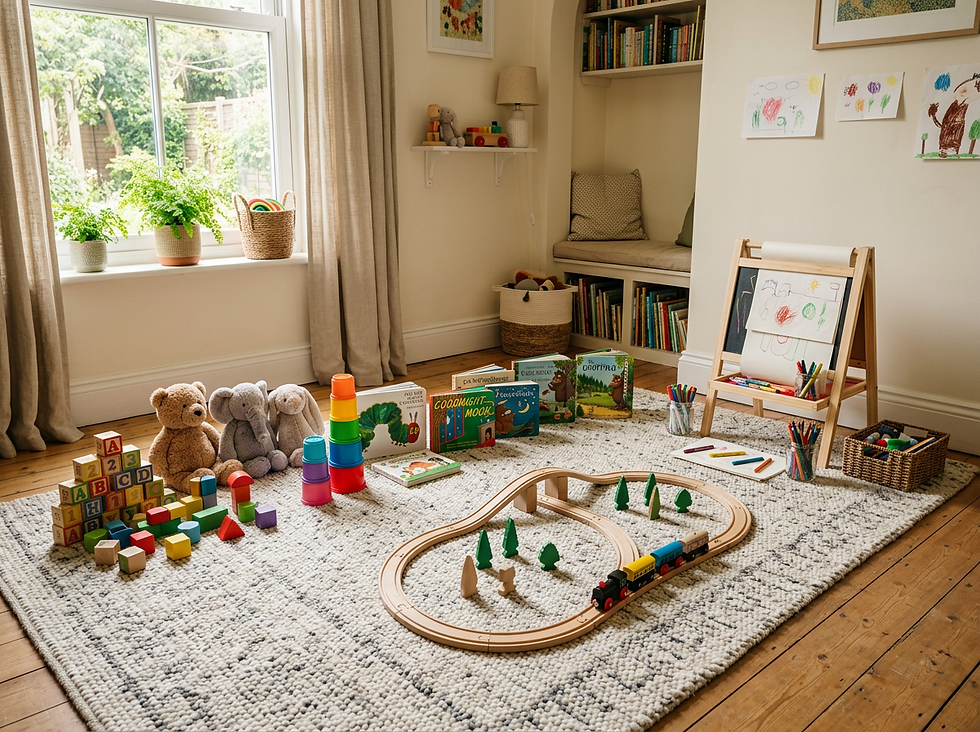
Eco-Friendly Parenting Choosing Safe Sustainable Wood and Fabric Toys
A toy box can look harmless and still carry a heavy footprint. Bright plastic blocks, flashing gadgets, and novelty toys often arrive wrapped in more plastic, break quickly, and end up forgotten at the bottom of a cupboard.
Choosing fewer, better toys is one of the most practical eco-friendly parenting choices a family can make. Sustainable wood and fabric toys offer a calmer alternative. They can be beautiful, durable, safe, and easier on the planet when made with care.
This does not mean every plastic toy must disappear overnight. It means looking at toys with a little more curiosity. What is it made from? How long will it last? Can it be repaired, washed, shared, or passed on?

Sustainable toys reduce plastic waste at home
Plastic toys are light, cheap, and widely available. The problem is that many are made from mixed plastics, batteries, stickers, paints, screws, and electronic parts. That makes them hard to recycle. When they crack or stop working, they often become waste.
Wood and fabric toys can lower that waste in several ways:
They often last longer because they have fewer parts that can snap or fail.
They are easier to repair, sand, stitch, or refresh.
They can be handed down between siblings, cousins, friends, or community toy libraries.
They encourage slower buying because they feel less disposable.
Wooden stacking rings, shape sorters, pretend food, train sets, doll houses, rattles, and puzzles can serve several ages if they are well made. Fabric toys, such as soft dolls, play silks, cloth books, sensory balls, and stuffed animals, can also stay useful for years.
The best environmental choice is often the toy that gets used the most for the longest time. A single high-quality wooden puzzle may replace several flimsy themed toys that lose their appeal in a week.
Natural materials are not automatically sustainable, though. Wood should come from responsibly managed sources, and fabric should be chosen with the same care. Look for cotton, linen, wool, hemp, or recycled textiles where possible. Certifications can help, but common sense matters too. A simple, repairable toy with minimal packaging is usually a better choice than a trendy “green” item wrapped in layers of plastic.

Wood and fabric toys can support safer play
Children explore with their hands and mouths, especially in the early years. Toy safety should always come before style or sustainability.
Well-made wooden and fabric toys can be a strong choice because they tend to avoid some concerns linked with low-quality plastic, such as brittle parts, peeling coatings, or cheap electronic components. Still, the material alone does not guarantee safety. A safe toy depends on good design, proper testing, and age-appropriate use.
For wooden toys, check that surfaces feel smooth and splinter-free. Edges should be rounded, not sharp. Paints, stains, and finishes should be non-toxic and suitable for children’s products. In many European markets, toys should carry the CE mark and meet relevant toy safety rules, such as EN 71 standards.
For fabric toys, seams should be strong and tidy. Buttons, beads, ribbons, and glued decorations can become choking hazards if they come loose. Stuffing should stay contained, and the toy should be washable or easy to clean.
A quick safety check before buying can help:
Choose toys that match the child’s age and stage.
Avoid small loose parts for babies and toddlers.
Check for strong seams, secure stitching, and smooth finishes.
Smell the toy if buying in person. A strong chemical odour can be a warning sign.
Read care labels and safety information before use.
Safe does not need to mean boring. A soft cotton doll, a wooden animal set, or a basket of fabric play scarves can fuel hours of pretend play, movement, storytelling, and problem-solving.
Durable toys grow with children
One reason sustainable wood and fabric toys are so valuable is their flexibility. They do not tell a child exactly how to play. A wooden block can be a tower, a phone, a bridge, a loaf of bread, or treasure. A square of fabric can become a cape, a blanket, a river, a picnic cloth, or a roof for a den.
That open-ended quality gives these toys a long life. Babies may grasp and mouth a wooden ring. Toddlers may stack it. Preschoolers may use it in pretend cooking. Older children may add it to a shop, farm, or construction game.
Durability also changes how families buy. Instead of chasing every new character or trend, parents can build a small collection of core toys that work together.
Good starter pieces include:
A set of wooden blocks in simple shapes.
A few fabric animals or dolls with washable covers.
Wooden vehicles without tiny breakable parts.
Play silks or cotton squares in different colours.
A sturdy wooden puzzle with large pieces.
A cloth book for babies or travel.
Durable toys may cost more at first, but cost per use can be much lower over time. A toy that lasts through years of play, then moves on to another family, gives far more value than a cheap toy that breaks after a few afternoons.

Ethical brands make sustainable choices easier
Buying eco-friendly toys is not only about materials. It is also about how those toys are made. Ethical brands pay attention to sourcing, worker conditions, packaging, and product life span.
Look for brands that are clear about:
Where their wood or fabric comes from.
Which finishes, dyes, and paints they use.
Whether products are tested for toy safety.
How they package and ship their toys.
Whether replacement parts or repair advice are available.
Responsible wood may be FSC-certified or described as coming from managed forests. Fabric toys may use organic or recycled fibres, low-impact dyes, or plastic-free filling. Packaging may be cardboard, paper, or reusable cotton bags rather than moulded plastic.
Transparency matters. A brand does not need perfect marketing language, but it should answer basic questions clearly. If the product description says only “natural” or “eco” without details, keep looking.
Second-hand shopping is also a powerful choice. Many wooden toys age well, and fabric toys can often be washed. Check second-hand items carefully for recalls, missing parts, loose paint, sharp edges, and hygiene before giving them to a child.

How to choose better toys without overthinking it
Sustainable shopping becomes easier with a simple filter. Before buying, ask three questions.
Will it last?
Choose strong construction, quality stitching, smooth wood, and timeless play value.
Is it safe for the child’s age?
Check size, finish, seams, removable parts, and safety labelling.
Can it avoid waste?
Favour minimal packaging, repairable materials, second-hand options, and toys that can be passed on.
It also helps to buy less often. A child does not need a huge toy collection to play well. Too many choices can make play feel scattered. A few thoughtful toys, rotated now and then, can feel fresh without adding clutter.
Sustainable parenting is not about perfection. It is about making better choices when they are available. Choosing safe, lasting wood and fabric toys helps reduce plastic waste, supports ethical makers, and creates a calmer, more thoughtful play space at home.
Start with one swap. Replace the next short-lived plastic novelty with a well-made wooden puzzle, a washable fabric animal, or a set of play scarves. Small changes in the toy box can grow into habits that children carry with them.